Leather is one of the oldest materials people have ever used, and still one of the most loved. A good leather wallet, belt or bag can last for decades and look better every year. But the word “leather” now covers everything from premium full grain hides to plastic-coated fabric.
This guide explains everything in one place: what leather is, how it’s made, the main types, how to tell real from fake, and how to care for it. Each section links to a deeper guide if you want to learn more.
Quick Answer: What Is Leather?
Leather is animal hide, most often cowhide, that has been tanned: treated so it stops decaying and becomes strong, flexible and long-lasting. Most leather is a by-product of the meat industry. It’s graded by which layer of the hide is used, from full grain (best) to split and bonded (lowest).
What Is Leather?
Leather is made from the skins of animals, mainly cows, buffalo, goats and sheep. Raw skin rots quickly, so it goes through tanning, a chemical process that changes the proteins in the skin so it becomes durable and stable.
Hide, skin and leather: what’s the difference?
- Hide: the skin of a large animal, like a cow or buffalo
- Skin: the skin of a smaller animal, like a goat or sheep
- Leather: hide or skin after tanning
How Is Leather Made?
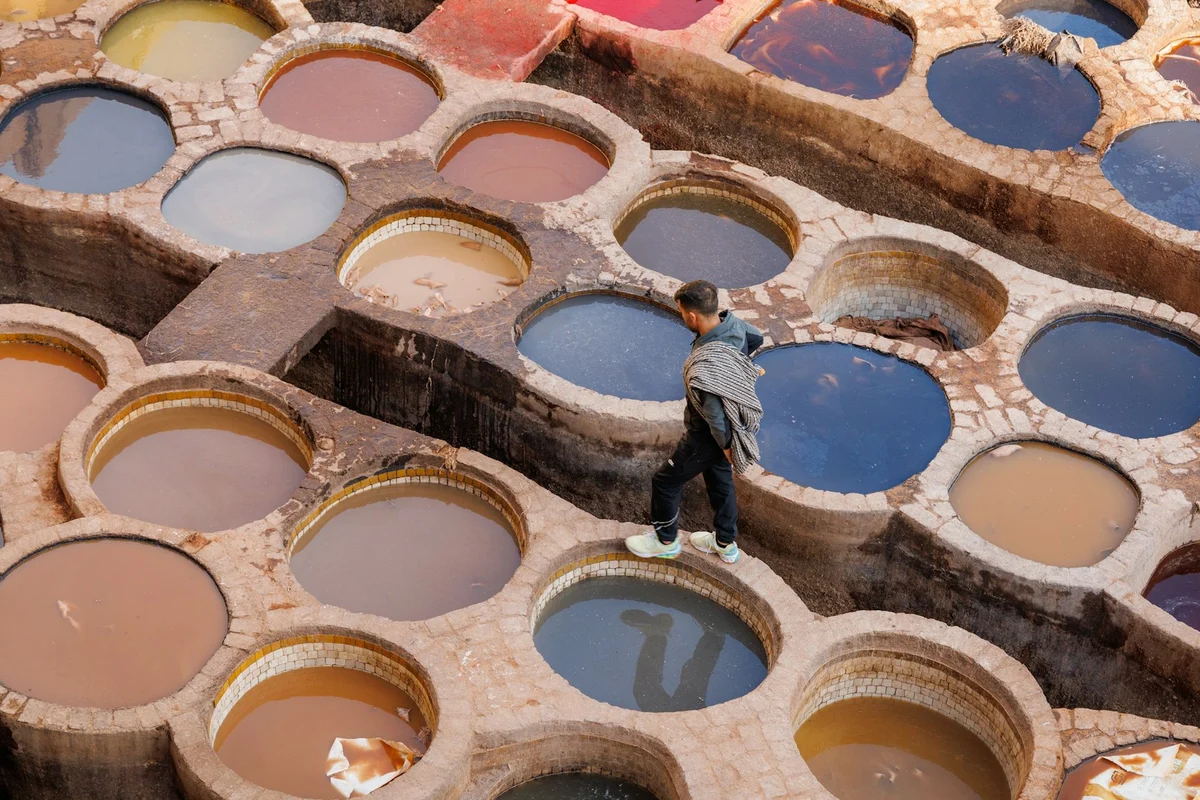
Making leather takes several stages, often over days or weeks.
1. Preparing the hide
The raw hide is salted to preserve it, then soaked to clean and rehydrate it. Hair and flesh are removed.
2. Tanning
The hide is treated with tanning agents that make it stable and resistant to rot. This is the step that turns skin into leather.
3. Crusting
The tanned leather is thinned to the right thickness, dyed and treated with oils so it stays soft and flexible.
4. Finishing
The surface is finished. It might be buffed, coated, embossed, polished or left natural, depending on the final look.
Chrome-Tanned vs Vegetable-Tanned Leather
Most leather today is chrome-tanned. A smaller share is vegetable-tanned.
| Chrome-tanned | Vegetable-tanned | |
|---|---|---|
| Tanning agent | Chromium salts | Plant tannins from bark and leaves |
| Time | Hours to days | Weeks |
| Feel | Soft, supple | Firmer, stiffer at first |
| Colour | Wide range, colourfast | Natural tones, darkens with age |
| Ageing | Changes little | Develops a strong patina |
| Common uses | Bags, jackets, shoes, upholstery | Belts, wallets, saddlery, premium goods |
Types of Leather at a Glance
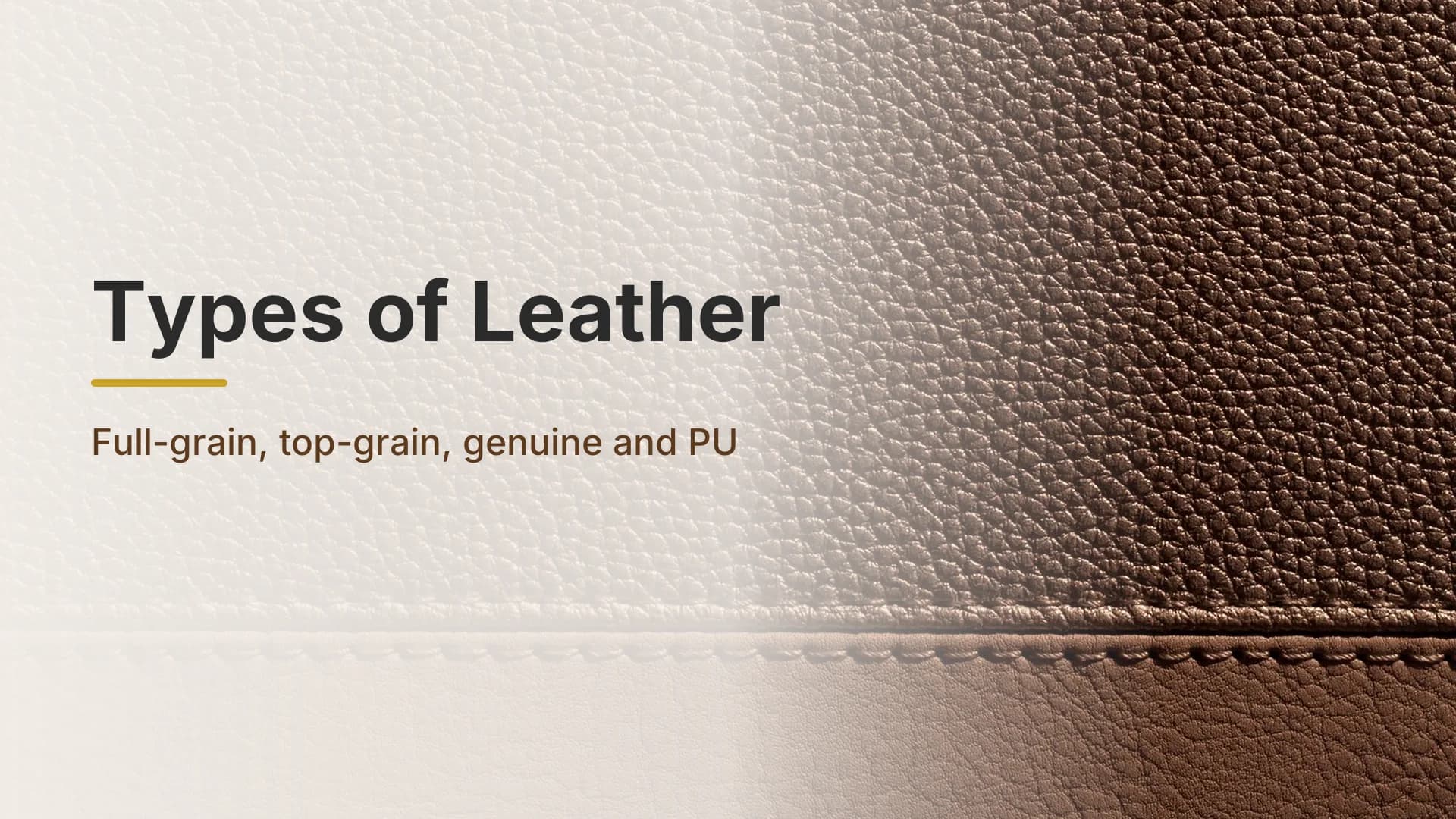
Leather is grouped by grade, animal and finish. The grades, from best to lowest:
| Grade | What it is | Quality |
|---|---|---|
| Full grain | Full top layer, untouched | Best |
| Top grain | Top layer, lightly sanded and coated | Very good |
| Corrected grain | Top layer, heavily sanded and embossed | Fair |
| Split (“genuine”) | Lower layer of the hide | Lower |
| Bonded | Leather scraps glued together | Lowest |
Finishes like suede, nubuck, nappa and patent change how leather looks and feels. Read the full breakdown in our guide to the types of leather.
Real Leather vs Synthetic Leather
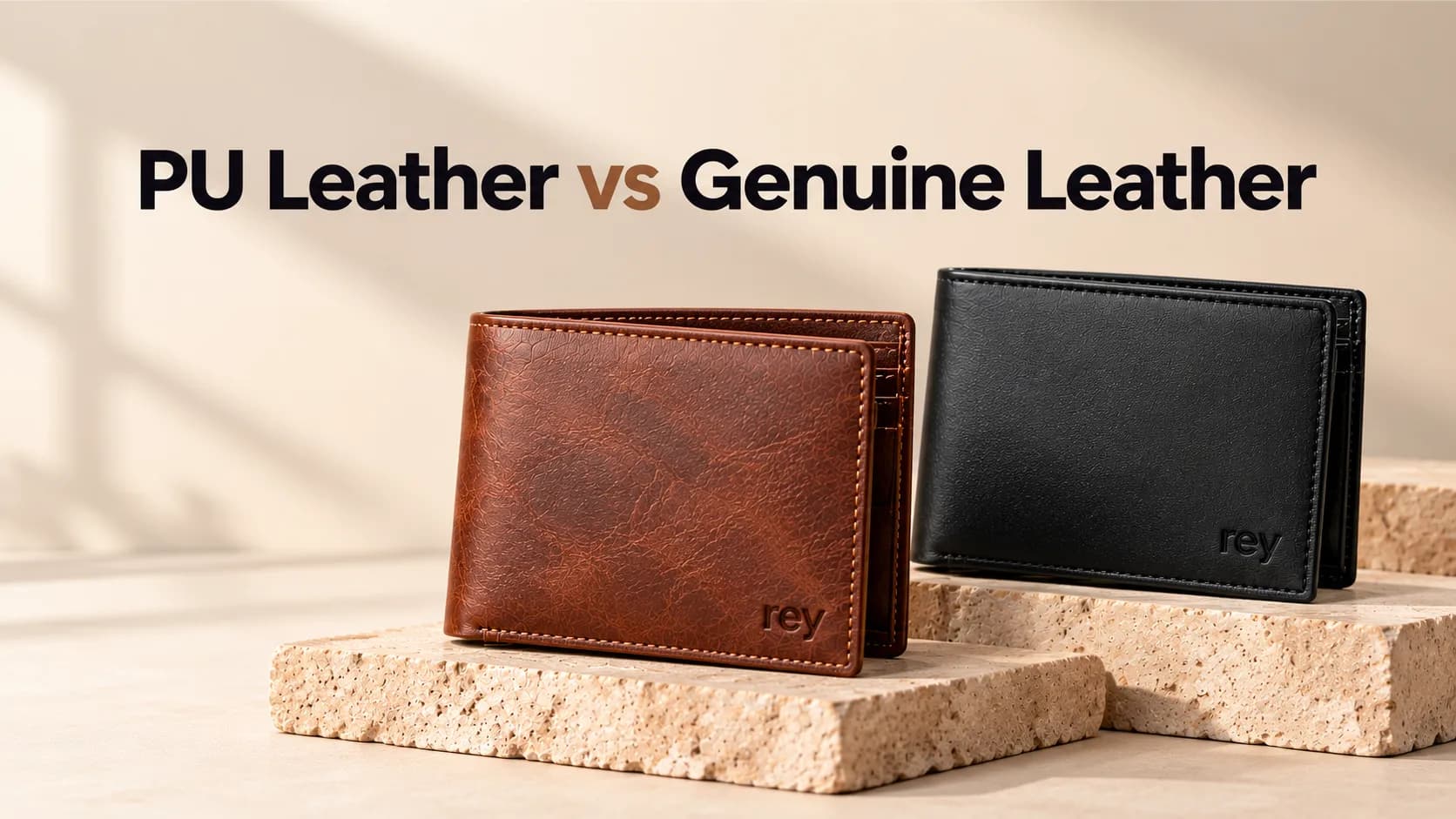
PU leather, faux leather, vegan leather and rexine are not leather. They’re usually fabric coated with plastic to look like leather. They cost less but crack and peel much sooner.
- Learn the differences in PU leather vs genuine leather
- Learn how to check before you buy in how to identify real leather
Why Leather Lasts: Its Key Properties
Durable
Leather’s dense fibres resist tearing and wear, which is why it suits items used every day.
Breathable
Real leather lets air and moisture pass through, so it feels comfortable against the skin.
Ages well
Good leather, especially full grain, develops a patina: a richer colour and soft shine from years of use.
Repairable
Scratches can often be buffed out, and dry leather can be restored with conditioner.
How to Choose Leather Products
Leather wallets
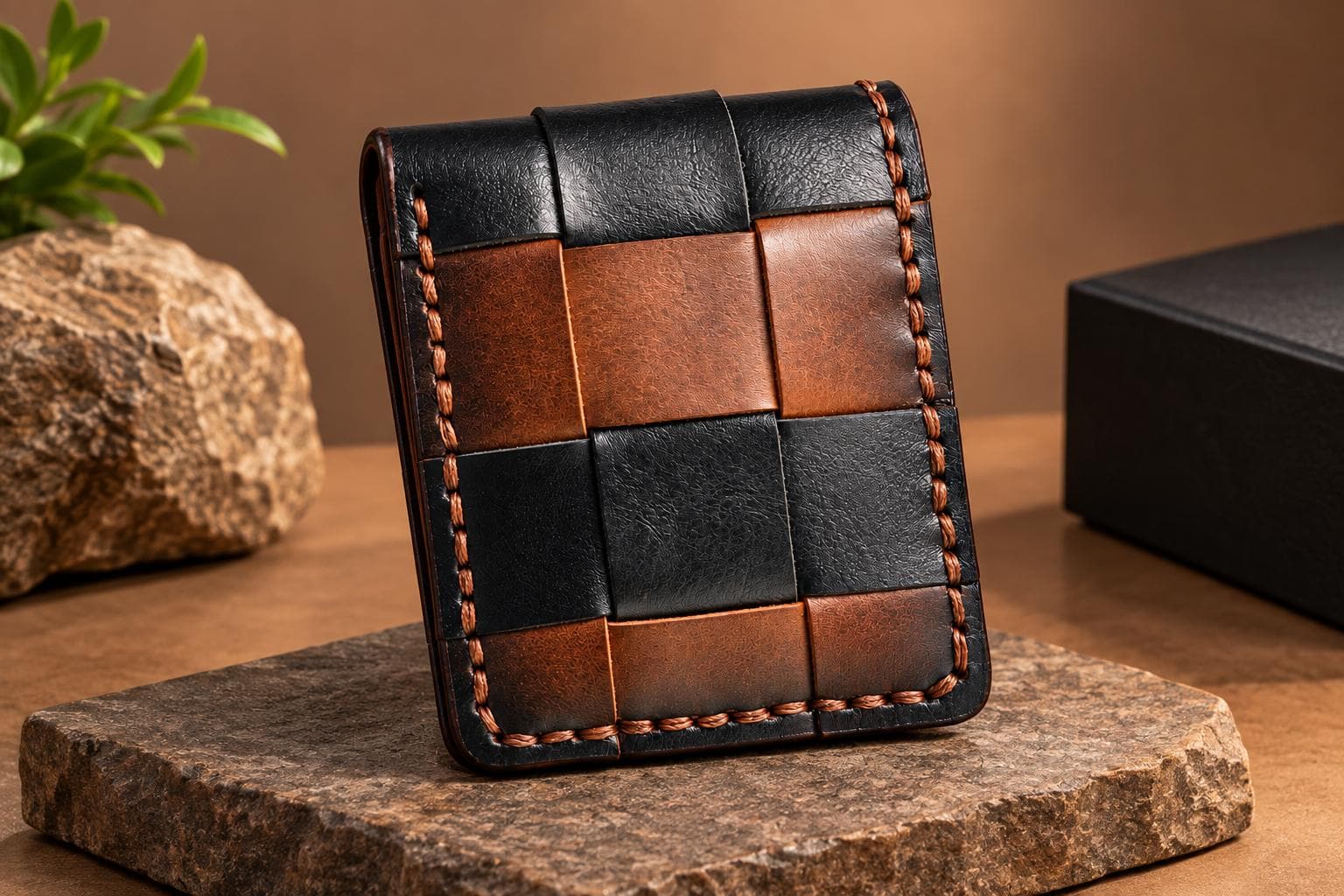
Look for full grain or top grain leather, tight stitching and smooth edges. See our men’s leather wallet buying guide and the types of wallets for men.
Leather belts
Choose full grain cowhide that won’t crack at the holes, in the right size. See our belt size guide.
Leather gifts
Leather wallets and belts make lasting gifts. See our gift ideas for men.
How to Care for Leather
- Keep it dry and ventilated, never in plastic
- Wipe it regularly with a soft cloth
- Condition it every 3–6 months
- Use silica gel during humid months
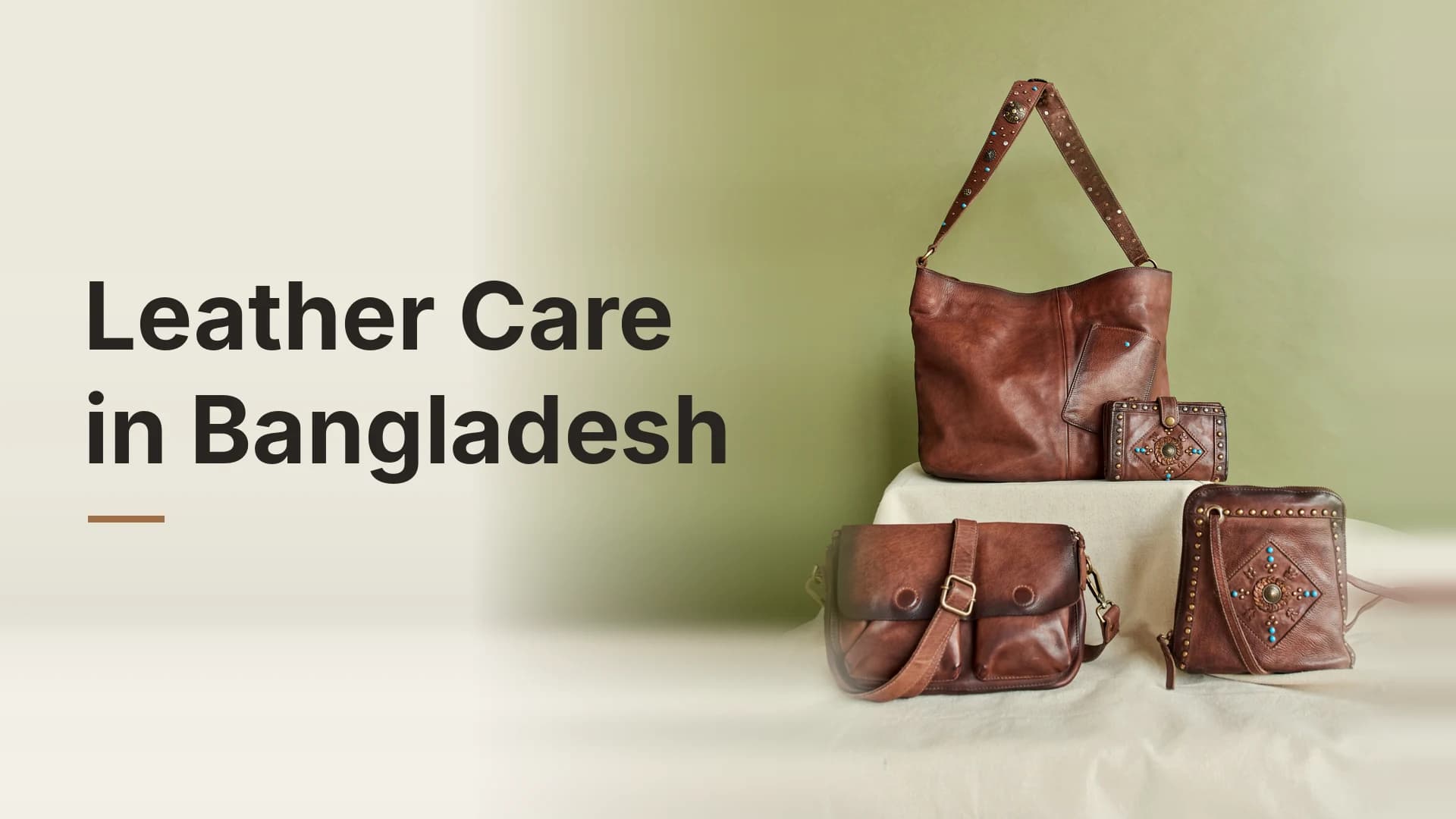
For mould prevention and monsoon tips, read our leather care guide for Bangladesh.
Leather in Bangladesh
Leather is one of Bangladesh’s major industries, with most tanning now based at the leather industrial estate in Savar. Most local leather is cowhide and goatskin, and around half or more of the country’s annual rawhide is collected during Eid-ul-Adha.
Leather Glossary
| Term | Meaning |
|---|---|
| Grain | The outer surface layer of a hide, with its natural pattern |
| Split | The lower layer of a hide, after the grain is removed |
| Tanning | The process that turns raw skin into stable leather |
| Patina | The rich colour and shine leather develops with use |
| Burnishing | Smoothing and polishing a leather edge |
| Suede | Leather with a soft, napped surface, usually from a split |
| Nubuck | Grain leather lightly sanded to a velvety finish |
| Full grain | The highest grade, with the full grain intact |
Frequently Asked Questions
What is leather made of?
Leather is made from animal hides or skins, mainly cow, buffalo, goat and sheep, that have been tanned to make them durable and resistant to rot.
How is leather made?
The hide is preserved, cleaned and de-haired, then tanned, thinned and dyed, softened with oils, and finally finished on the surface.
What is the best type of leather?
Full grain leather. It keeps the strongest top layer of the hide, lasts the longest and develops a patina over time.
Is genuine leather real leather?
Yes, but “genuine leather” usually refers to a lower grade, often split leather. Full grain and top grain are higher quality.
Is PU leather real leather?
No. PU leather is a synthetic material, usually fabric coated with polyurethane plastic.
How long does leather last?
Well-made full grain leather can last for decades with basic care. Lower grades and synthetics wear out much faster.
Start With the Basics, Then Go Deeper
Leather is simple once you know what to look for: real hide, good tanning, a high grade, and a little care. Use the guides linked above to go deeper on any topic.
When you’re ready, explore REY’s leather wallets and belts.