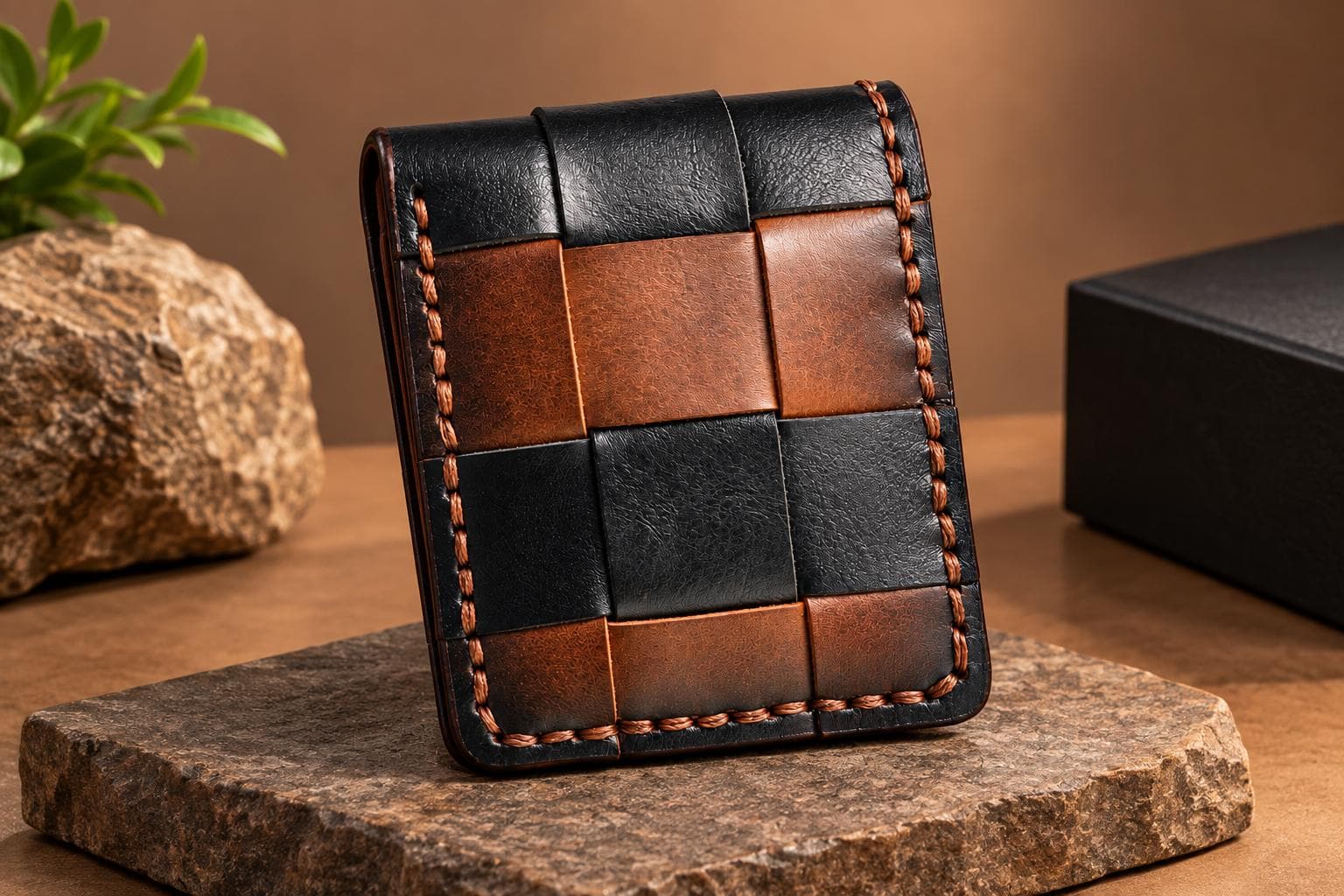
“Genuine leather”, “full grain”, “top grain”, “suede”… leather labels can be confusing, and some of them are designed to sound better than they are. Two wallets can both say “real leather” and still be completely different in quality.
This guide explains the main types of leather in plain language: the grades, the animals leather comes from, and the finishes that change how it looks and feels. By the end, you’ll know what each label means and which type is worth paying for.
Quick Answer: What Are the Main Types of Leather?
Leather is usually grouped in three ways:
- By grade (which layer of the hide is used): full grain, top grain, corrected grain, split (“genuine”) and bonded leather
- By animal: cow, buffalo, goat, sheep and exotic leathers
- By finish: suede, nubuck, nappa, patent and aniline leather
For everyday items like wallets and belts, full grain or top grain cowhide gives the best balance of strength, looks and lifespan.
Leather Grades: From Best to Lowest
A thick animal hide is split into layers. The top layer, called the grain, has the tightest, strongest fibres and the natural surface pattern. The lower layer, called the split, is looser and weaker. A leather’s grade depends on which layer it comes from and how much it’s been altered.
Full Grain Leather
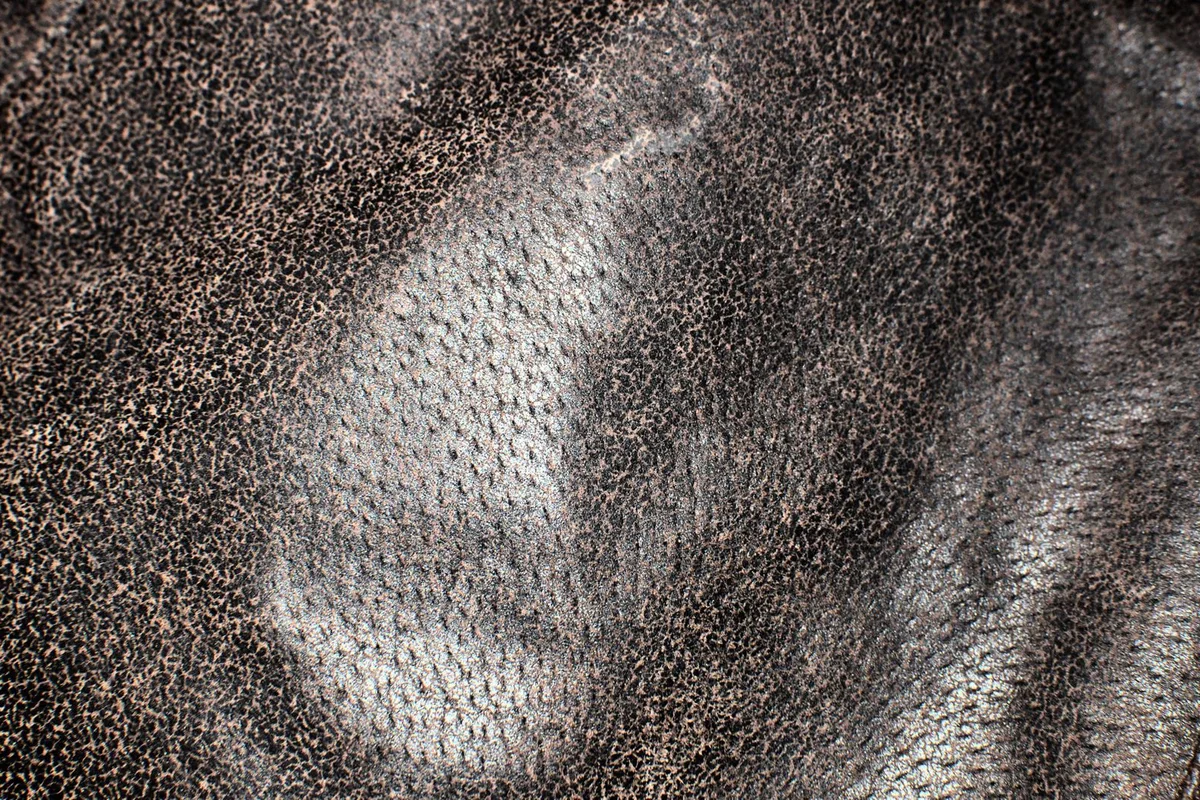
Full grain is the highest grade. It keeps the entire top layer of the hide, including natural marks, pores and small scars. Nothing is sanded away, so it’s the strongest and most durable leather. Over time it develops a patina, a richer colour and soft shine that comes with use.
Top Grain Leather
Top grain also comes from the top layer, but the surface is lightly sanded or buffed to remove marks, then finished with a coating. It looks more even and resists stains better, but it’s slightly less durable than full grain and doesn’t age in the same way.
The term is used in two ways: some brands use “top grain” for any leather from the top layer, including full grain. On a label, it usually means “not full grain”.
Corrected Grain Leather
Corrected grain is top-layer leather from a hide with more surface damage. It’s sanded more heavily, then coated and often embossed with an artificial grain pattern. It’s real leather, but much of its natural character is gone.
Split Leather (Often Sold as “Genuine Leather”)
Split leather comes from the lower layer once the grain has been removed. It’s real leather but weaker and less durable. It’s often given a coated surface to look like grain leather, and frequently sold simply as “genuine leather”. That label is technically true, but it usually signals a lower grade.
Bonded Leather
Bonded leather is made from leather scraps and fibres glued together and coated. It contains some leather but behaves more like a synthetic material: it often peels and cracks within a few years.
Leather Grades Compared
| Grade | Layer | Durability | Ages well? | Price |
|---|---|---|---|---|
| Full grain | Full top layer, untouched | Highest | Yes, develops patina | Highest |
| Top grain | Top layer, lightly sanded | High | Somewhat | High |
| Corrected grain | Top layer, heavily sanded and embossed | Medium | Little | Medium |
| Split (“genuine”) | Lower layer | Low to medium | Little | Lower |
| Bonded | Scraps glued together | Low | No, peels | Lowest |
Types of Leather by Animal
Cowhide
The most widely used leather in the world. Cowhide is thick, strong and resistant to wear, which makes it ideal for wallets, belts, shoes and bags.
Buffalo Leather
Thicker and more rugged than cowhide, with a coarser grain. Buffalo leather is very durable and suits heavy-use items like bags and work belts.
Goatskin
Lighter and softer than cowhide but still strong for its weight, with a fine pebbled grain. It’s widely used for gloves, small leather goods and shoes.
Sheepskin and Lambskin
Very soft and smooth, often used for jackets and gloves. It feels luxurious but scratches and wears faster than cowhide.
Exotic Leathers
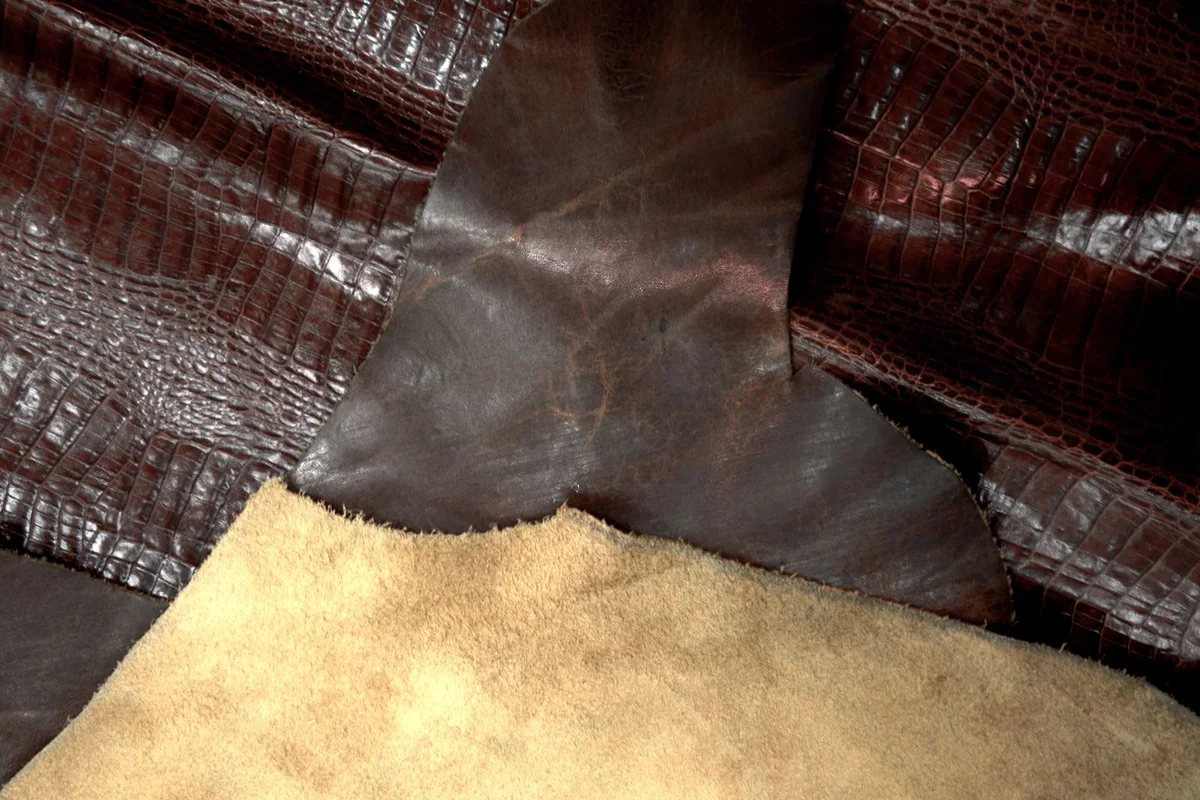
Crocodile, snake, ostrich and similar leathers are rare and expensive. Trade in many exotic skins is regulated, and many “croc” wallets are actually embossed cowhide.
Types of Leather by Finish
Suede
Leather with a soft, napped surface, usually made from the inner side of split leather. See the full section below.
Nubuck
Top-grain leather that’s been lightly sanded on the outer side to create a fine, velvety surface. It looks similar to suede but is stronger, because it comes from the grain layer.
Nappa
A term for very soft, smooth, full-grain leather, usually from sheep, lamb or kid goat. It’s common in premium gloves, bags and car seats.
Patent Leather
Leather with a high-gloss, mirror-like coating. It’s mostly used for formal shoes and handbags.
Aniline and Semi-Aniline Leather
Aniline leather is dyed all the way through with no surface coating, so it shows the natural grain and feels very soft, but it stains easily. Semi-aniline adds a light protective coat, balancing natural look and practicality.
What Is Suede Leather?
Suede is real leather with a soft, fuzzy surface. It’s usually made from the inner side of a split hide, brushed to raise the fibres into a velvety nap.
How Suede Is Made
After the hide is split, the lower layer is tanned and its inner surface is sanded or brushed. Lamb, goat and calf suede are the softest, while cow suede is thicker and sturdier.
Suede vs Nubuck
Both have a soft, velvety feel, but they come from different sides of the hide:
- Suede: made from the inner side, usually split leather. It has a longer nap and is softer, but less durable.
- Nubuck: made from the outer grain side, lightly sanded. It has a finer nap and is stronger and more water-resistant.
Is Suede Good for Wallets and Belts?
Suede looks stylish but absorbs water and stains easily, and it wears faster with daily handling. For a wallet or belt you’ll use every day, especially in Bangladesh’s humid climate, smooth full grain or top grain leather is the more practical choice.
Caring for Suede
Keep it dry, brush it gently with a suede brush to restore the nap, and use a suede eraser for small marks. Avoid water and regular leather polish, which can flatten and darken the surface.
Real Leather vs Artificial Leather
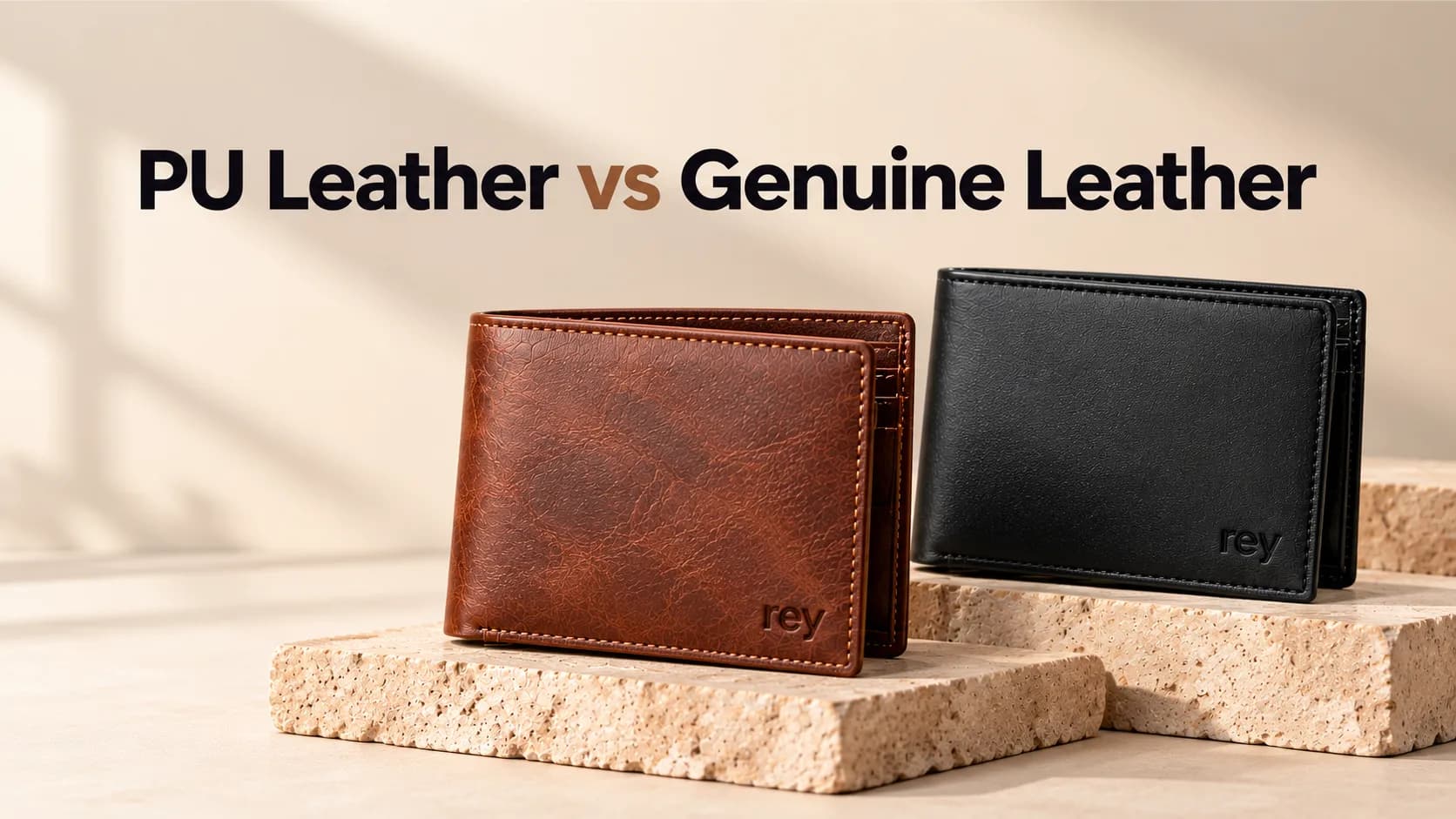
PU leather, faux leather, vegan leather and rexine are not types of leather. They’re synthetic materials made to look like leather, usually fabric coated with plastic. They’re cheaper but tend to crack and peel over time.
To learn how to tell them apart, read our guide to PU leather vs genuine leather.
Which Type of Leather Is Best for Wallets, Belts and Bags?
| Item | Best leather | Why |
|---|---|---|
| Wallet | Full grain or top grain cowhide | Handles daily bending and handling, ages well |
| Belt | Full grain cowhide | Strong enough not to stretch or crack at the holes |
| Card holder | Full grain cowhide or goatskin | Thin but strong |
| Bag | Full grain cowhide or buffalo | Carries weight, lasts for years |
| Jacket | Lambskin or goatskin | Soft and flexible |
| Avoid for daily use | Bonded leather, PU | Peels and cracks quickly |
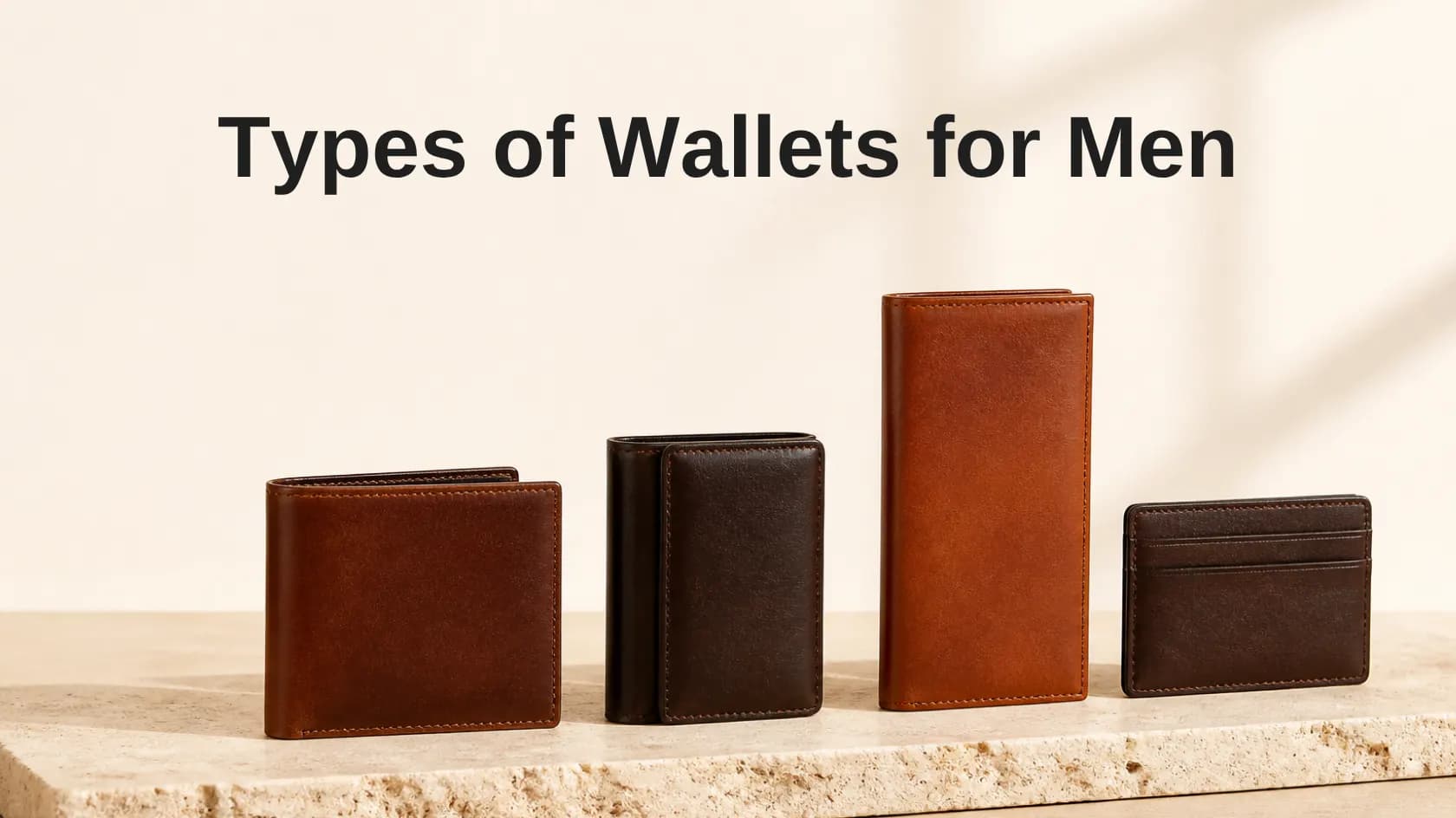
If you’re choosing a wallet style, our guide to the types of wallets for men explains which design suits how you carry. For belts, start with our belt size guide.
Leather in Bangladesh
Leather is one of Bangladesh’s major industries, and much of it is tanned at the leather industrial estate in Savar, outside Dhaka. Most local leather is cowhide and goatskin.
Eid-ul-Adha plays a huge role. Around 50–60% of the country’s annual rawhide is collected during the Qurbani season, which is why Bangladesh has a steady supply of quality cow and goat leather.
Frequently Asked Questions
How many types of leather are there?
There’s no single number, because leather is grouped in different ways. By grade there are five main types: full grain, top grain, corrected grain, split and bonded. Leather is also grouped by animal (cow, goat, buffalo, sheep) and by finish (suede, nubuck, nappa, patent).
What is the best type of leather?
Full grain leather is the best grade. It keeps the strongest top layer of the hide, lasts the longest and develops a patina over time. Cowhide is the most practical animal leather for everyday goods.
Is full grain better than top grain?
Yes, for durability and ageing. Full grain keeps the entire surface, while top grain is sanded and coated. Top grain looks more uniform and resists stains, so it’s still a good choice.
What is suede leather?
Suede is real leather with a soft, fuzzy surface, usually made from the inner side of split leather. It looks stylish but stains and absorbs water easily.
Is “genuine leather” real leather?
Yes, but the label is often used for split leather, a lower grade. If a product is full grain or top grain, sellers usually say so.
Which leather lasts the longest?
Full grain cowhide or buffalo leather. With basic care, it can last for decades.
Choose Leather That Lasts
Not all leather is equal. Full grain is the strongest and ages the best, top grain is a good practical choice, and split, bonded and synthetic materials wear out much faster. For everyday items, cowhide is hard to beat.
When you’re ready to choose, explore REY’s leather wallets and belts, made for daily use.